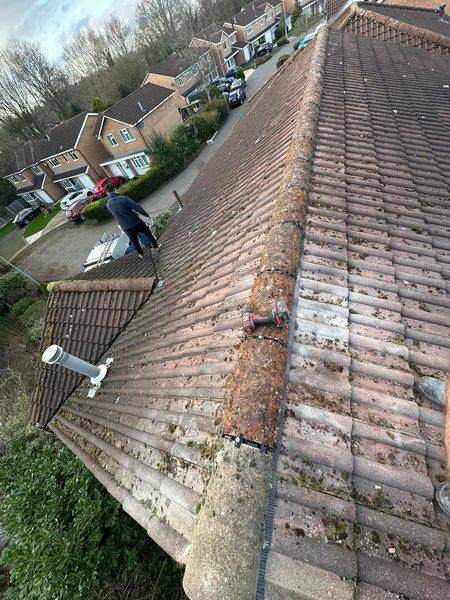
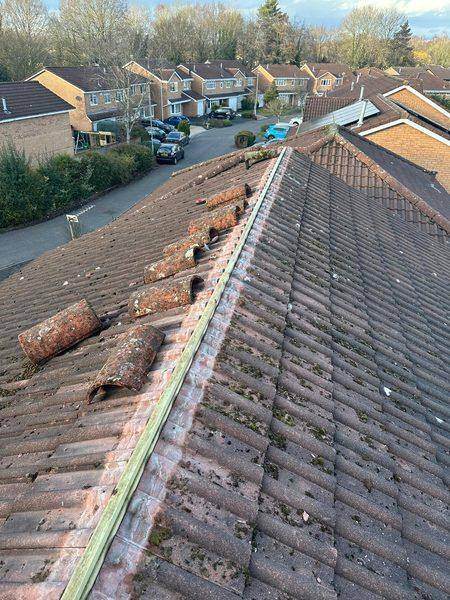
A long ridge run on a Warrington house where the bedding had crumbled. The half-round tiles came off, a ventilated dry ridge system went the full length, and each tile was clamped and screwed back down.
Mortar has been holding ridge tiles on for a very long time and it has one flaw: it is rigid, and a roof is not. Tiles expand in the sun and contract overnight, the timbers move with the seasons, and the bedding is the thing that has to absorb all of it. Eventually it cracks, then it crumbles, and on a windy night the tiles that were relying on it start to move.
That is where this Warrington house had got to. Standing on the ridge you could see daylight in the joints and pick mortar out by hand, and the half-round tiles along the apex sat loose on what was left of their bed. Rather than rebed the whole run in mortar and be back in the same position later, we fitted a dry ridge kit — the mechanical alternative, which is most of what our dry verge and ridge work in Warrington now consists of.
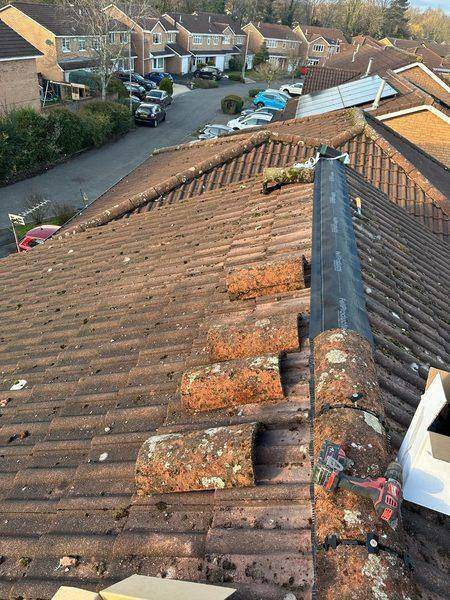
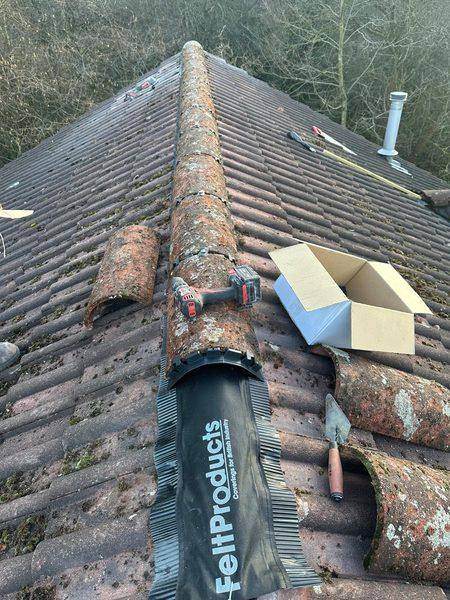
The half-round tiles came off one at a time and were laid over on the slope out of the way. They were heavily lichened but structurally fine, so they were going back on. Underneath, the old bedding came away in lumps and dust, and all of it had to be cleared off the apex and out of the top of the tile courses rather than swept down the roof.
With the ridge line bare we went along it and checked what the mortar had been hiding — the top courses of tiles either side, the state of the timber at the apex, and whether anything had been getting in. This is worth doing before anything new goes down, because a dry ridge closes the top of the roof up again and you do not want to be lifting it back off.
A ventilated ridge roll was rolled out down the full length of the apex and fixed off, with its combed edges dressed down over the tile corrugations either side. That roll is doing two jobs: closing the gap so wind, rain and birds cannot get under the ridge, while still letting the roof space breathe along its whole length.
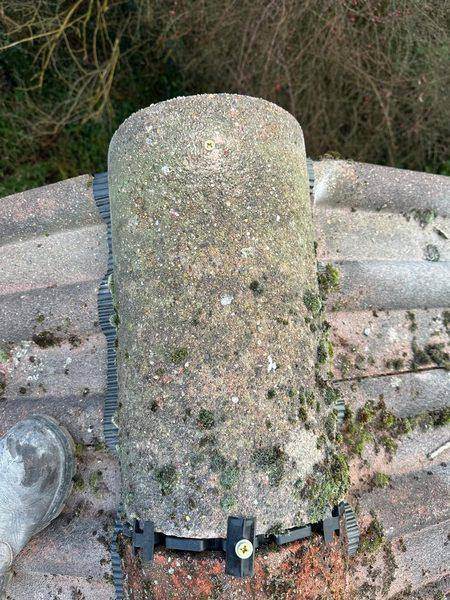
Then the ridge tiles went back on, each one sitting on a union clip and held by a screw driven down into the batten below, so the tile is fixed to the roof by metal rather than stuck to it by cement. The run was worked along end to end and the last tile closed off, then the whole line was checked over for alignment and for anything left loose.
A dry ridge is not just mortar with screws added. Because nothing is stuck rigid, the tiles can move a fraction with heat and cold without anything having to crack to allow it, and the ventilation gap along the apex helps carry moisture out of the roof space instead of letting it condense on the timbers. Signs it is time to look at yours: gaps opening along the ridge, tiles that rock when you push them from a ladder, mortar crumbs turning up in the gutter, or water marks high up in the loft.
Read more on the dry verge and dry ridge page, or see the ridge tiles and kit we fitted on another Warrington roof. If your own ridge line is looking ragged, message us and we will come and price it up.
Tell us what the roof is doing and roughly where you are. We will come and look, and you get a written price before anything starts.